We are into the second week of a war and the U.S. State Department has labeled a CNN reporter's footage of open shops and fresh produce at a truck stop in northwestern Iran as "pro-regime propaganda." It's odd - that label. But, as the administration further explained their logic to NPR, all they ask is that any news outlet confirms their reporting with the U.S. government before presenting it to the public.
Is the presentation to the public one of the freedoms of a free press?
This isn't a Zeitgeist about the legality of the administration's claim, but the "pro-regime propaganda" logical defense certainly makes for some Panoptica narratives-behind-the-stories searching.
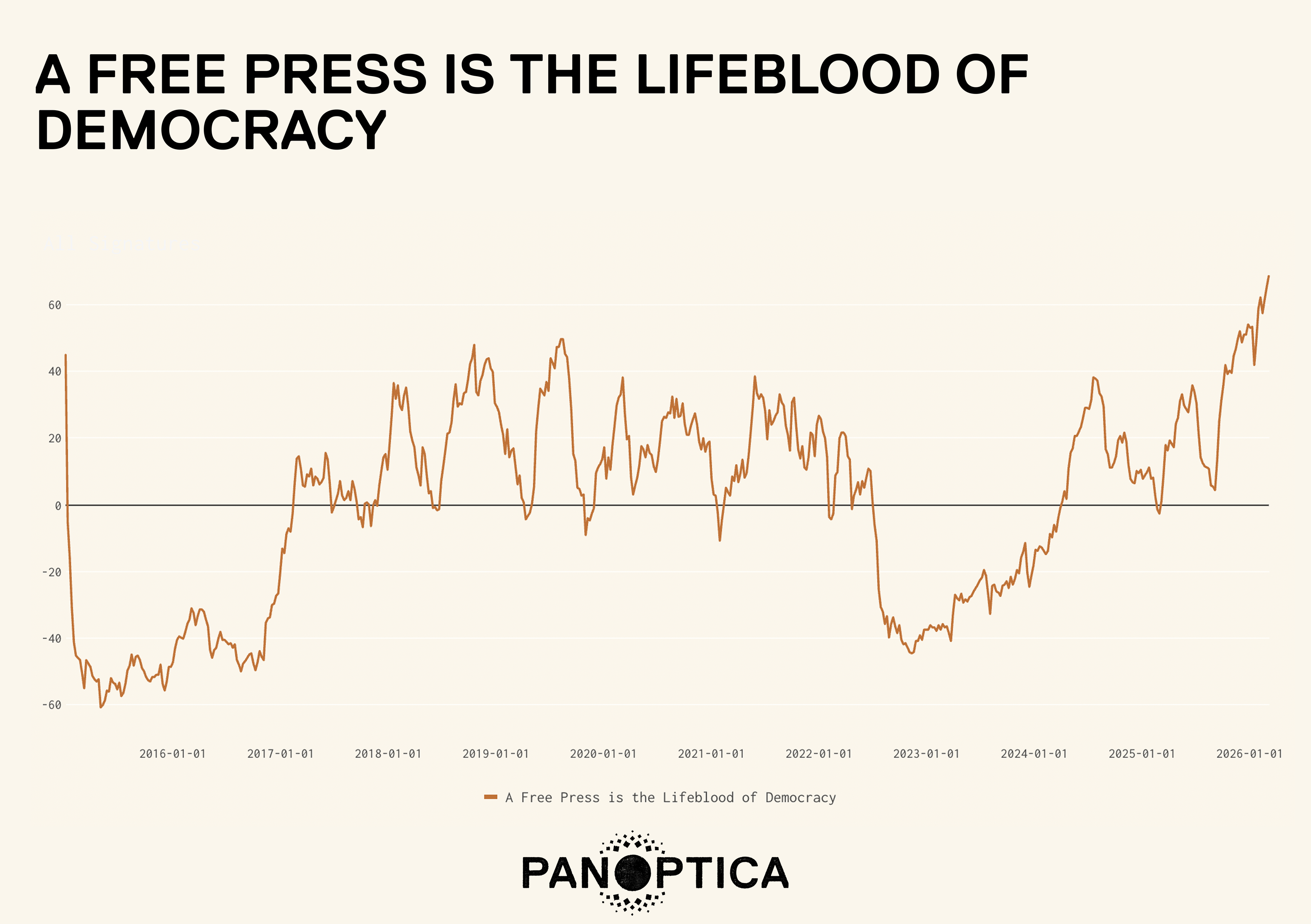
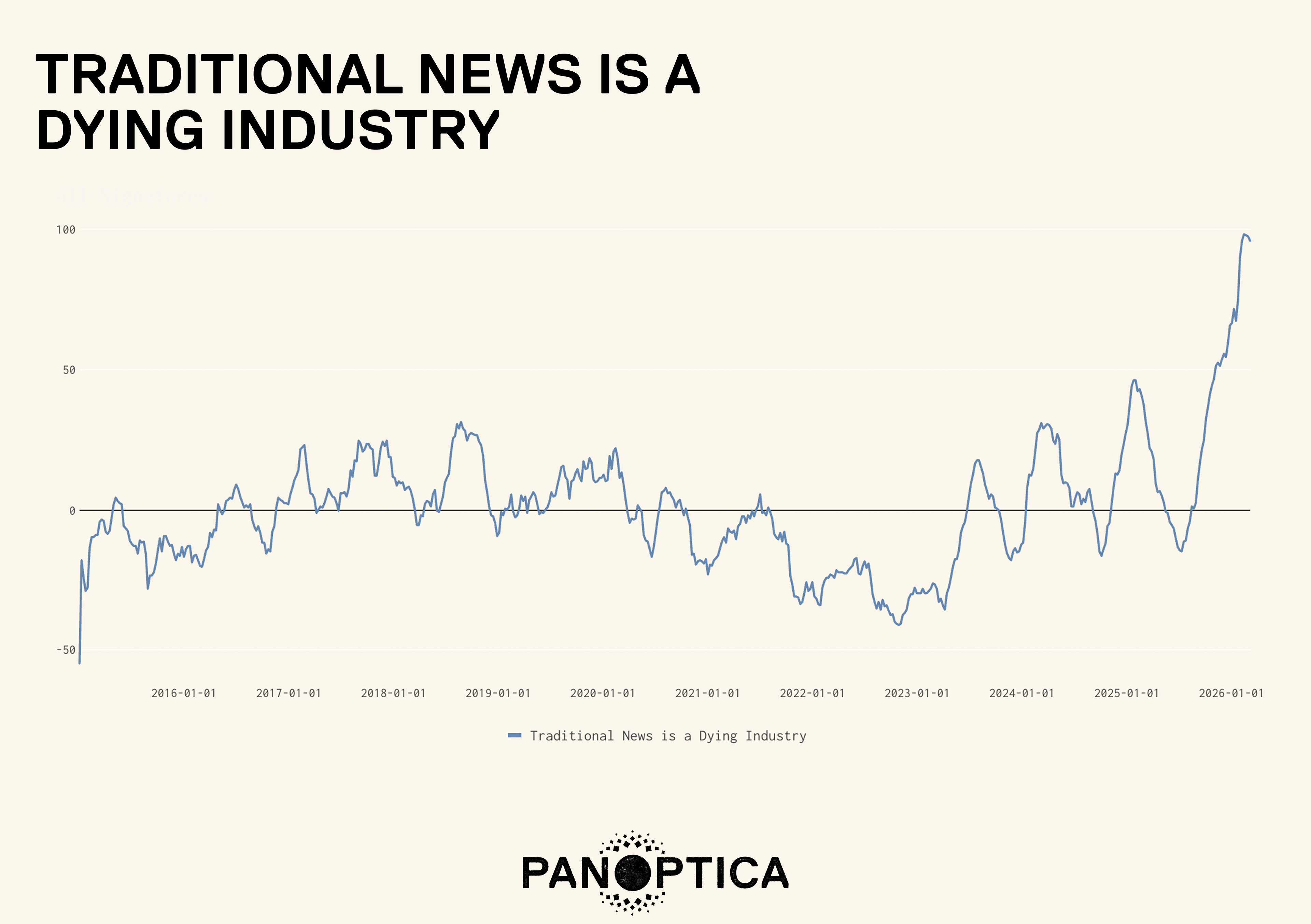
Two Storyboards jump out this week in light of these war coverage related headlines, "Traditional News is a Dying Industry" and "A Free Press is the Lifeblood of Democracy." They're both elevated at the same time. The contradiction between "dying" and "lifeblood" raises questions on what comes next:
The Gallup data on trust in mass media is a useful place to start. As of late 2025, 28% of respondents "trust the mass media to report the news fully, accurately, and fairly," which is an all-time low. When they divide respondents by political affiliation, 51% of Democrats trust the media in this way, and all of 8% of Republicans do. That skew likely confirms a few mainstream media claims you've heard over the years, but the Gallup data gets a mention here because we can see how it's being played to inside of the latest news media transaction.
Since the strategy for mature/late-stage industries is to roll them up and consolidate, David Ellison's deal to absorb Warner Bros. Discovery into his Paramount empire for $111 billion, at least in business school theory, makes sense. If nothing else, it makes for excellent "dying industry" narrative cover for helping sell the idea of the deal. And, proving Ellison knows how to follow multiple significant narratives at the same time, it also helps explain why he told CNBC that CNN would maintain full editorial independence under his ownership. Ellison, in "lifeblood" mode, even went so far as to say, "We want to be in the truth business."
The two Storyboards can be true at the same time, even if they won't stay true at the same time.
Between The Free Press (the business, ahem) Bari Weiss running CBS News, and Anderson Cooper leaving 60 Minutes - the unofficially official regulatory approval followed the lines, too, and was all of signed, sealed, and delivered last week.
But where does this leave the attitudes about a free press (not the business, ahem), next? Is it really dying, or is it still the lifeblood? And what part of free is free?
The fact that Ellison knows exactly what to say and do is probably the most clarifying data point in the art of this deal. Knowing which narrative to play is its own kind of power.
There's no telling what happens next, but there is the other Storyboard that's well on the move:
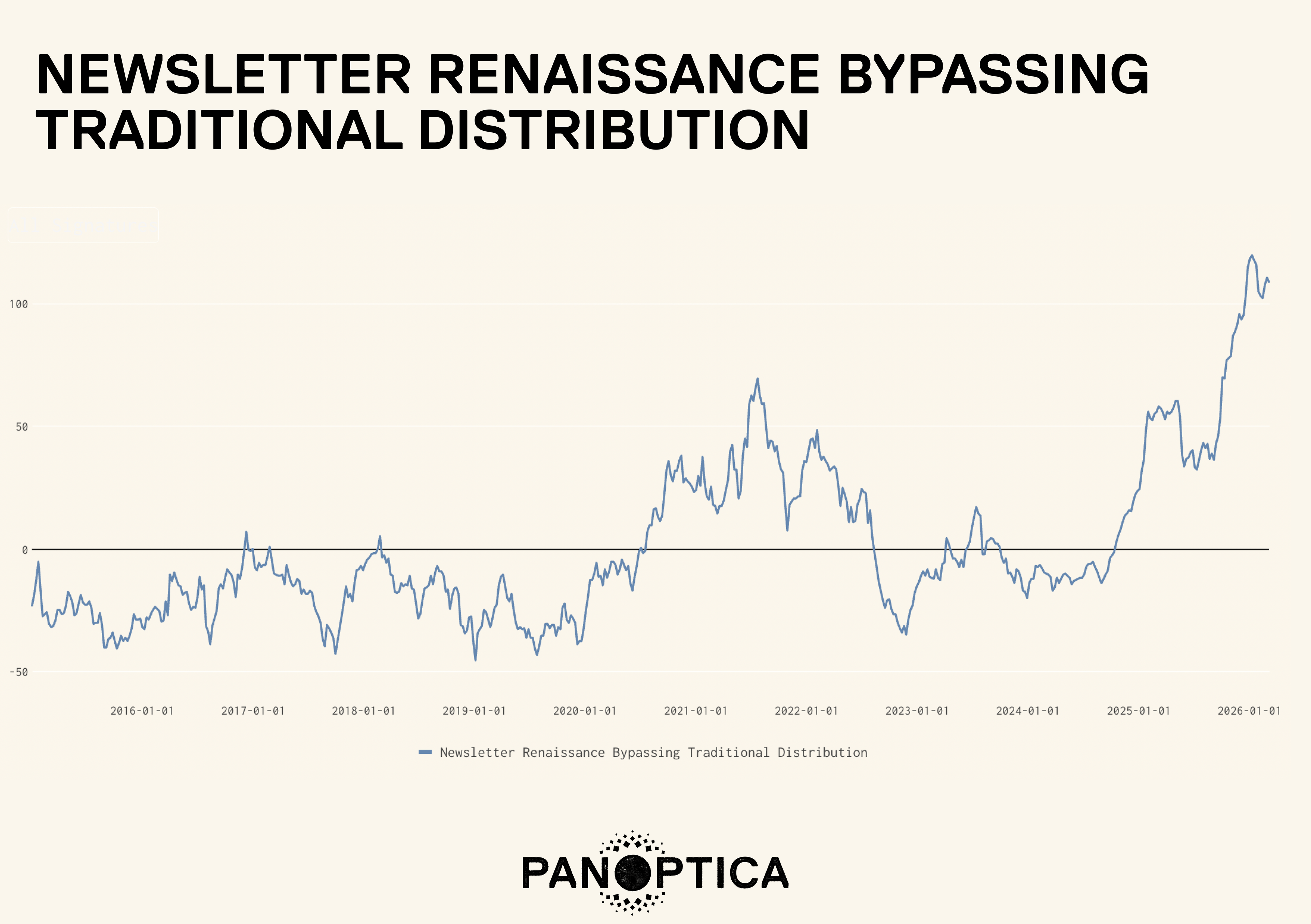
While newsletters aren't, won't, and can't be the free press of eras past (even if they can sort of be/try to become The Free Press for a deal of their own), they trade potential distribution limitations for the opportunity and freedoms that come with it. There are lots of ways the newsletter incentives backfire, but the defections are part of this story, too.
When Scott MacFarlane, the high-output court and justice beat reporter, announced he was leaving CBS to pursue "some independence" and to find "new spaces" to share his work that better aligns with his personal goals earlier this week - he's probably not teeing up a role at another major media outlet. While there's no Gallup data surveying the journalists themselves, their disenfranchisement seems as strong as their readerships.
The reporters at warzone truck stops, and the MacFarlane defectors of the industry both are after the same thing. The former is still trying to tell a story of what's actually happening at a truck stop. The latter is filing for independence based on personal values.
The democracy signal is loud in our rhetoric and our polling. The budget lines and balance sheets say otherwise. Panoptica is watching.