
The increased involvement of ICE in Minneapolis has been framed, primarily, under the idea that mass immigration is ruining American cities. We have a Panoptica Storyboard tracking this, and it's been on heightened watch for some time:
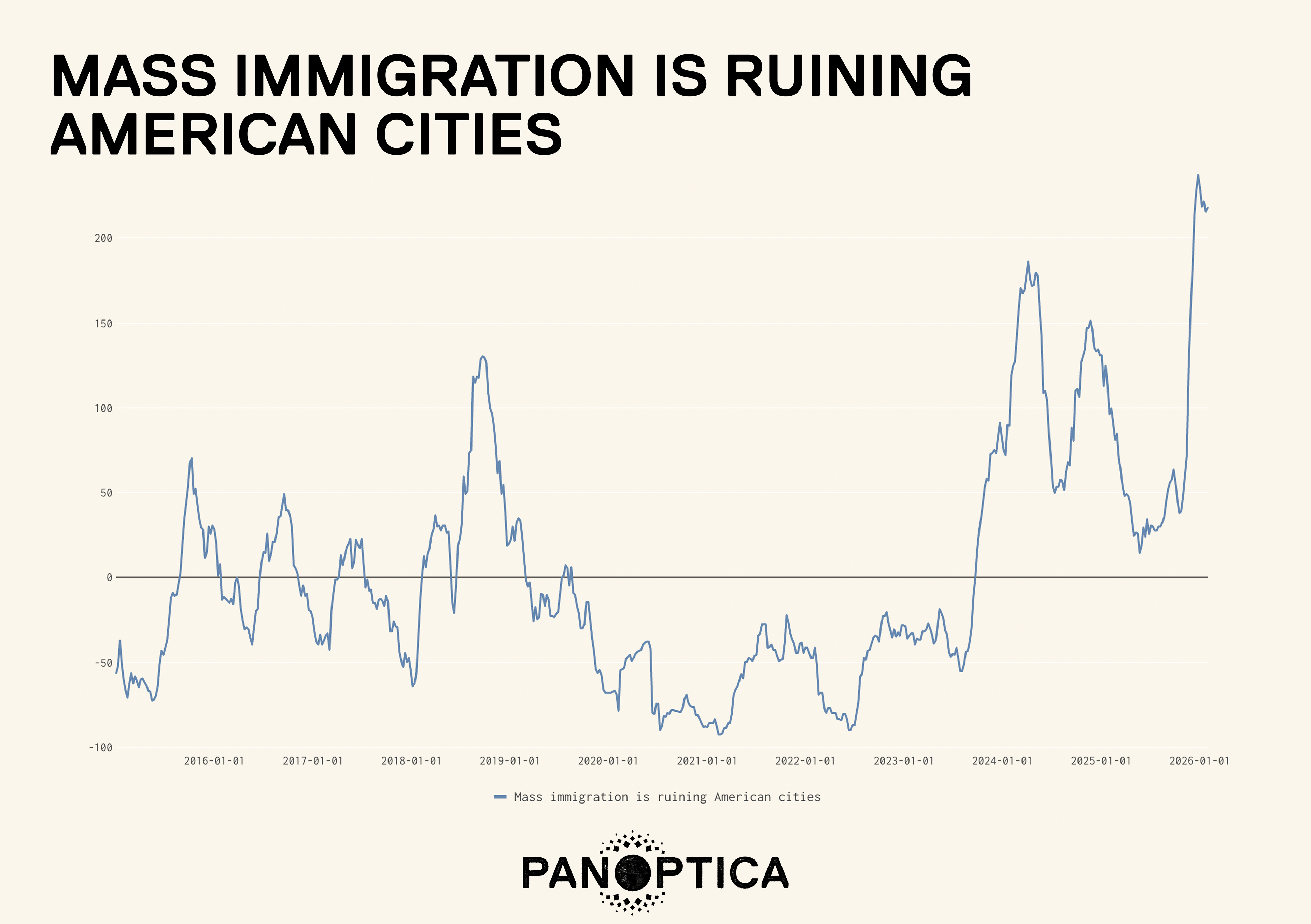
Call it what it is: political cover. The most recent operation, described as the largest federal immigration enforcement action ever, was framed around a crisis that the data shows media sources already believed in, or at least loudly voiced. Whether that belief matches reality or serves political purpose is the thread worth pulling.
Now, ICE is not police and police is not ICE. But under definitions involving uniforms, weapons, placement in designated locations with claims to be enforcing laws, let’s agree there’s some operational overlap. ICE is just new terminology in narrative space. Police has history, institutional memory, and, something that should matter, some established baseline of public trust that rises and falls but doesn’t entirely go away.
When we zoom out to the January 23-25 cascade of shootings, lawsuits, and mass protests, it's not surprising to see the "American police are becoming violent and oppressive" signature spike:
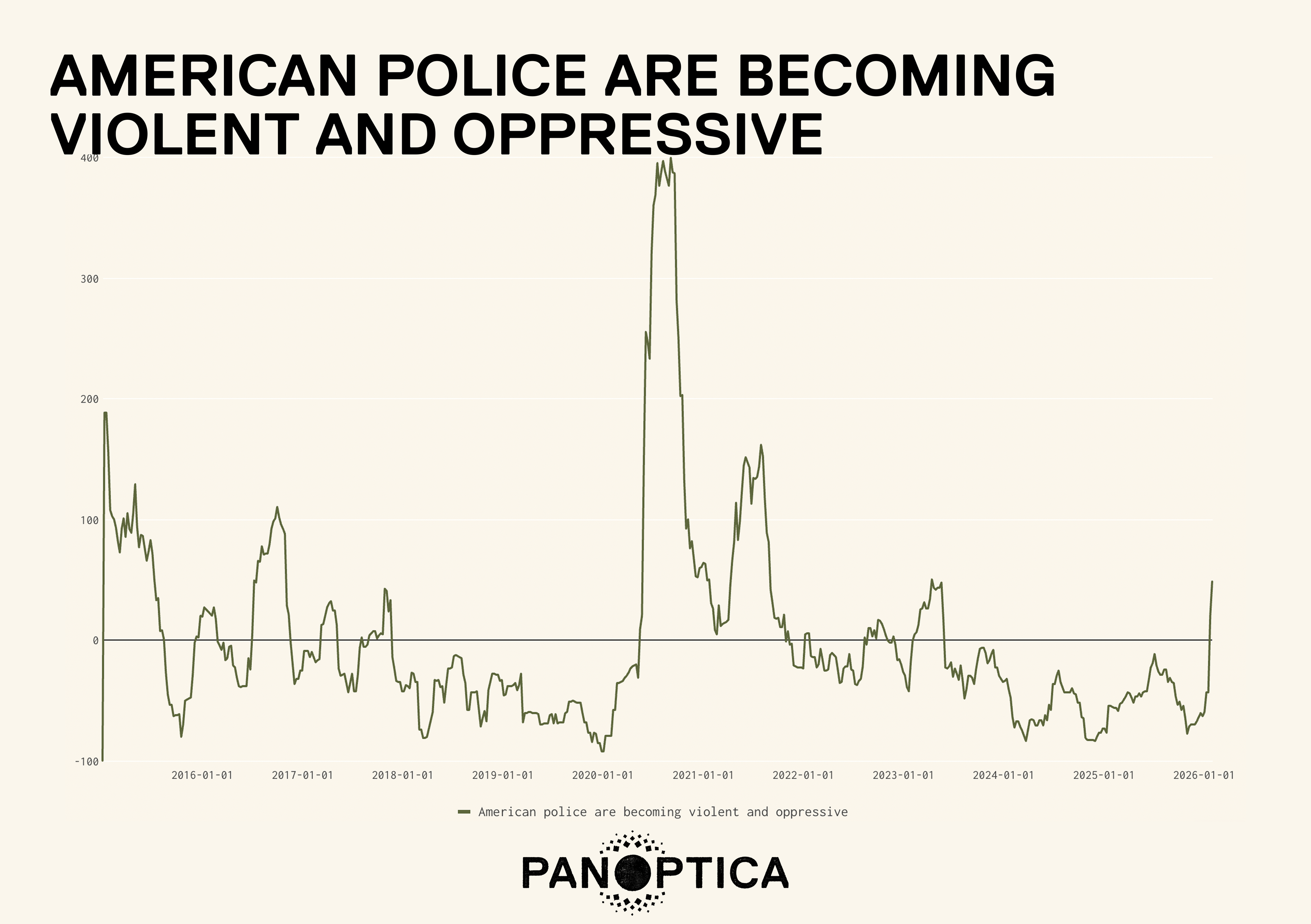
This isn't recognition so much as it is renarration. Before late January, immigration agents doing protest work were tools of crisis management. After Minneapolis, they're being framed as perpetrators of violence. These are the same types of actions, seen through very different frames. The framing notably changed very quickly, very recently, and this signature being on the move comes with all sorts of additional risks to that baseline of public trust idea.
When we find one Storyboard moving like this, it’s a good habit to look for others. A surprisingly inert signature helps give this story even more nuance: "American police are public servants doing their best." Look below and note how it's stuck in negative territory, but despite the headlines has remained essentially flat:
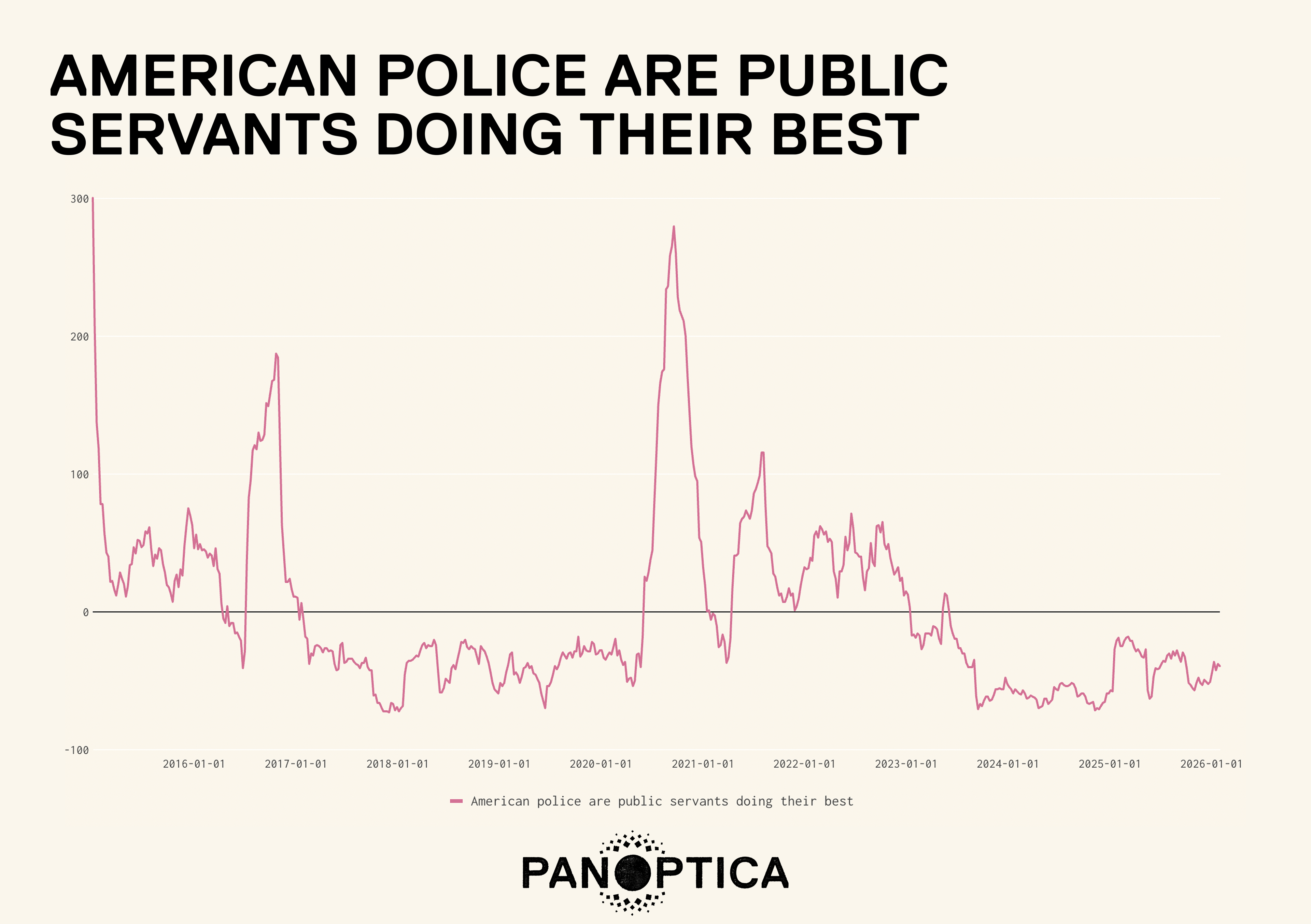
Local law enforcement says public trust is eroding, but the belief itself isn't being attacked further at this time. Now, few are defending it either, but the story isn't changing so much as it’s noticeably inert.
This is where any forward inflection feels riskier. The frustration, if not failure, of immigration policies is well covered. The ICE actions are in the crosshairs as a problem. But public servants belief isn't collapsing so much as it is abandoned - and this creates a legitimacy gap that could widen or close in the weeks ahead.
If "police as public servants" stays negative and doesn't move while "police as violent" keeps rising, you have a widening institutional credibility gap. You don’t want to see enforcement without legitimacy, policy without credibility, or more orders being executed by institutions nobody believes in.
But - if that baseline belief holds and protests don't turn harder against the institutions, and if people are vocal about immigration policies and enforcement actions without losing faith in the possibility of competent, trustworthy policing - there's a narrow path forward. It’s one where the angle becomes: this enforcement failed because it was executed poorly, not because enforcement itself is illegitimate.
The chart data will tell us which way it goes. We’ll be watching.
(You can too - these Storyboards are all freely available on Panoptica)