All political conflicts involve coordinated storytelling. The current Iranian conflict is no different, and this one goes back at least to its official start in June 2025. If you missed it, Ben Hunt did write about it in real time (in what now feels like a lifetime ago), but the reminder he laid out then was that we'd see prescriptive narratives about what "must" happen in advance of future actions, and descriptive statements that would be used to provide cover.
He said this before we started putting Storyboards in public on Panoptica. So now, nine months later, with Storyboards and Panoptica for all to see, we can show how well that narrative machinery he described is running.
Look below and find the beginning of 2026, where you'll see the initial spikes in both our Politics Storyboard on "The US must stop involvement in foreign wars" and our Stories of America Storyboard on "American soldiers are the best in the world". These closely align with Operation Epic Fury's timeline. This isn't about new rhetoric so much as spotting the repeating patterns of conflict. (Note: per Ben's piece, Pro subscribers can see way deeper analysis of the narrative mobilization arc. Here we're showing you the high-level Storyboards everyone can see on Panoptica).
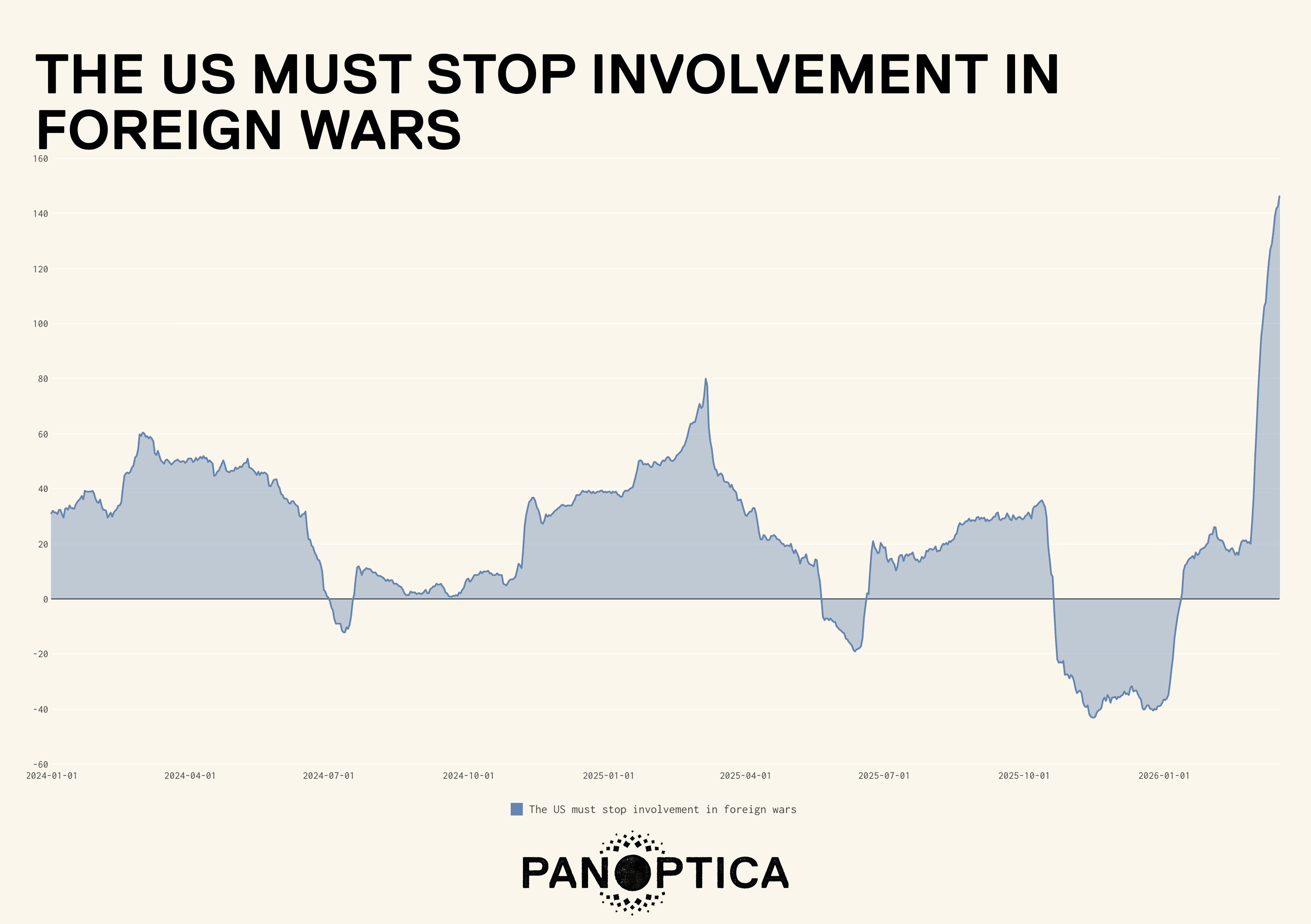
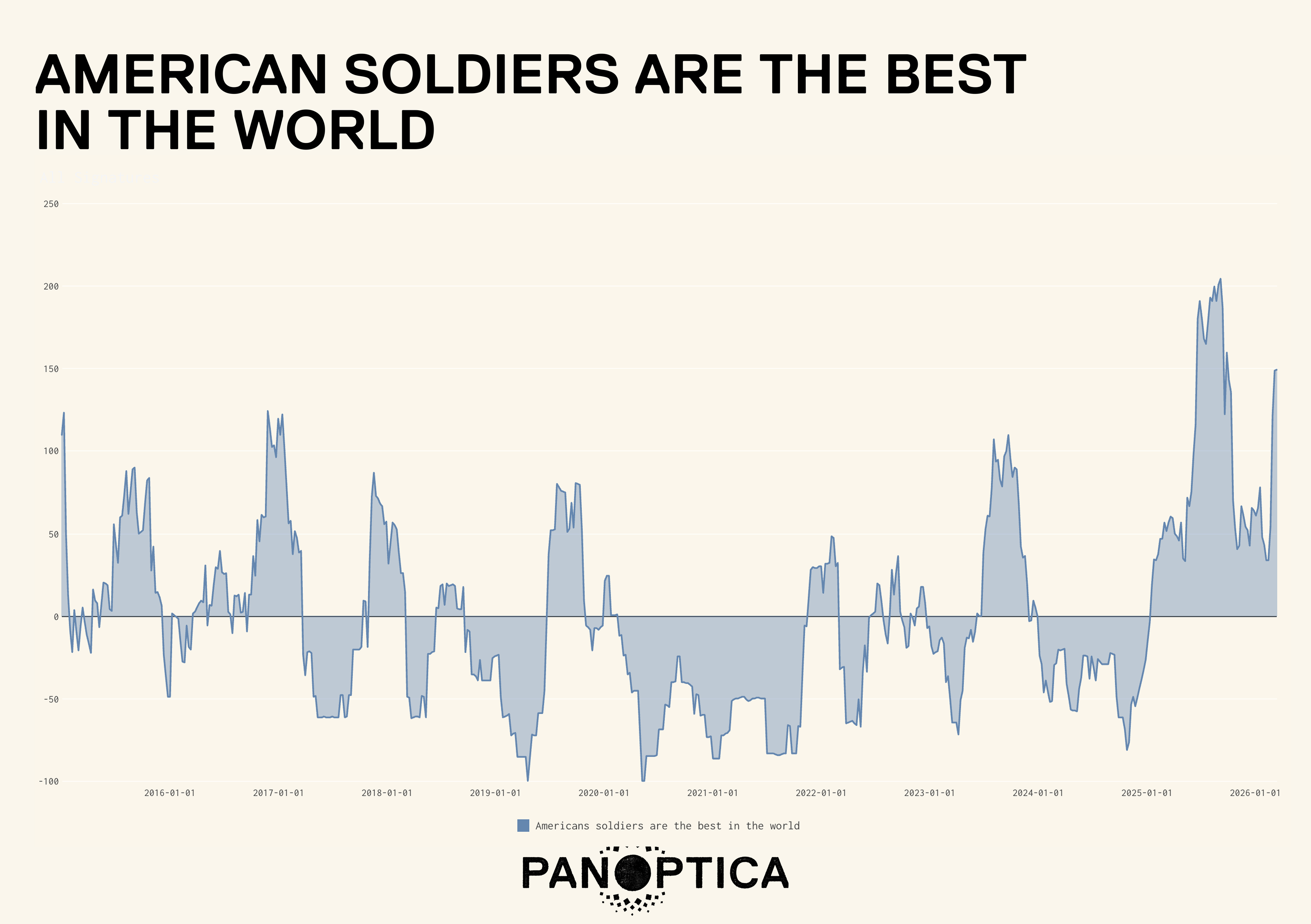
In practice, here's how these work and what to watch for. When you're reading the news (or doomscrolling social media) and see "Iran is evil" or "soldiers are brave," those are descriptive. They explain what's already true and provide cover for action already underway. But when you see "Iran must be stopped" or "we must act," those are prescriptive. They are meant to mobilize support before events unfold.
When the White House needed to further justify military action against Iran in February, they knew they needed to utilize both frames accordingly. The Storyboards help us visualize it.
Trump's prescriptive restraint language ("I'd prefer to talk," "not endless") provided the groundwork during the lead-up. Hegseth's kill talk ("awe-inspiring lethality," "we fight to win," "no stupid rules of engagement") was descriptive cover, soon after the attacks began.
Part of this is clearly stating the obvious. Nobody needs a focus group to know "I'd prefer to talk" and "we fight to win" speak to different people with different purposes at different times. But when they're used together, they create a load-bearing messaging platform of sorts. The descriptions fit with the prescriptions, and support the actions in defensible layers. The mobilization of the patterns has to be done, just so.
Think about how much more powerful an order of centralized military action is if you've first asserted the "we have the best soldiers" claim. Think about how after you've said it, the confidence in the action feels different. That's why you do that in advance of criticism, and that's why we can look for these patterns.
The execution of the current communications strategy has its weak points. The Storyboards can help us think through what pushes a Signature higher, and what might also bring it back down. It matters that we look from all sides here.
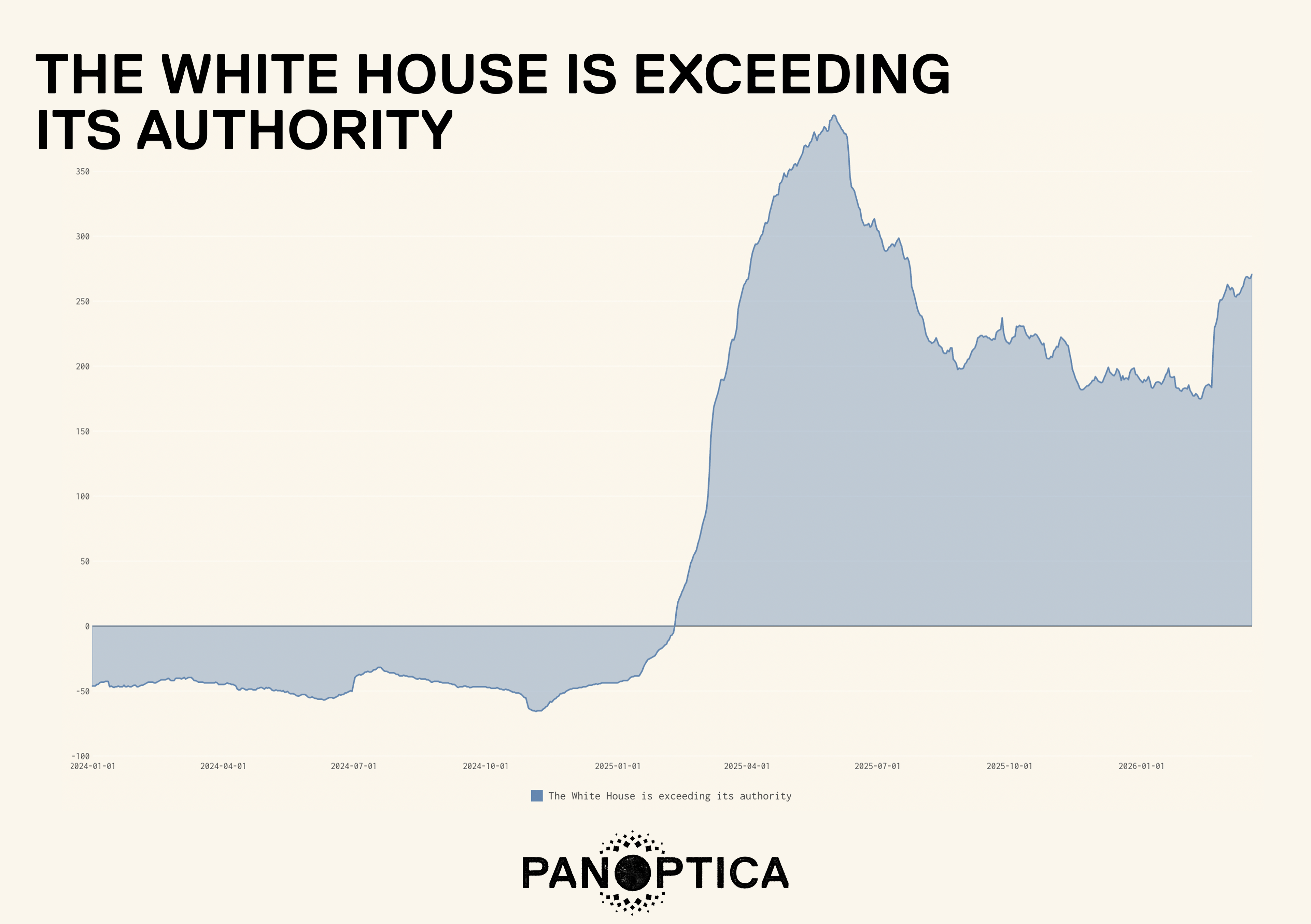
Take the "White House is exceeding its authority" narrative and note how it's been elevated for months, not spiking like the Iran war, but running higher since Trump federalized D.C.'s police force and deployed National Guard troops in August 2025, despite a media awareness of falling crime rates. This opened the door for critics, who called it a "test case for future deployments of federal force." Now, when the same White House justifies further foreign military action using warrior superiority rhetoric, that messaging reactivates that permission structure from the opposition's perspective, too.
Polling from prior to the 2024 election shows Americans simultaneously want less foreign intervention and believe their military is best. If the soldiers are the best, is an act required when a threat of confident action will do? The less-intervention public sentiment is likely to be tested next, and the longer the conflict with Iran extends, the more pressure we could see on this front. Watch for new descriptions and prescriptions to emerge from opposition parties in these exact stories.
The load-bearing claims can only stay elevated if the prescriptive and descriptive language isn't challenged by sentiment. It's already shaping up to be a major midterm issue, because the "less foreign intervention" story was already in place before 2024. These Storyboards can help track the strength of these stories in real time. We'll be watching.